
Heat Your Greenhouse, Your Cabin, AND Your Hot Water With a Compost Pile - GROW YOUR OWN FOOD YEAR-ROUND!
Yes....it works. The physics and proven systems are evidence this works.
Here's something most folks never figure out.
That compost pile you're building? It's a furnace.
It runs hot for months, throwing off real heat the entire time, and almost everybody just lets that heat walk off into the sky. Meanwhile they're paying to heat their greenhouse, their cabin, and their hot water some other way.
That's a waste. And it's a waste of something you were going to build anyway.
So let me explain how I'd do it. This is a 3-part system. One compost pile heats your greenhouse, heats your cabin, and heats your hot water. All three.
How the heat happens
When a compost pile breaks down it gets hot. Not warm — hot. A good working pile runs between 120 and 160 degrees in the center.
That heat isn't at the bottom of the pile and it isn't at the top. It's in the middle. That's where the microbes are doing all the work, and that's where you're going to pull your heat from.
The pile and the pipe
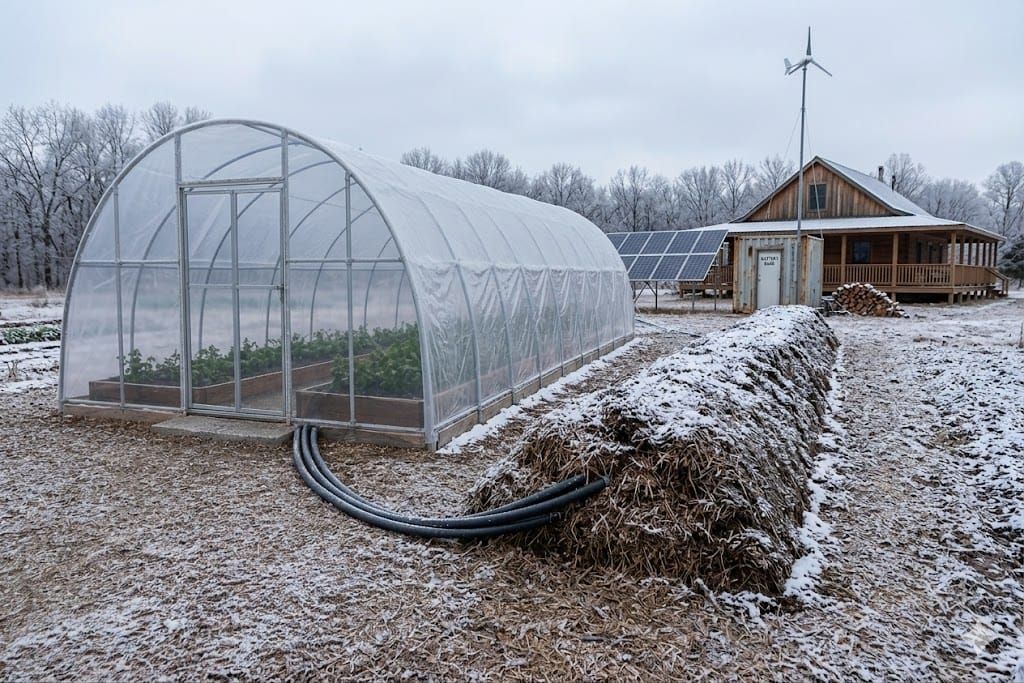
You build your compost pile outside the greenhouse. And you build it as long as your greenhouse is. Fifty-foot greenhouse, fifty-foot pile. If you're heating three things off of it, you need the mass to do it.
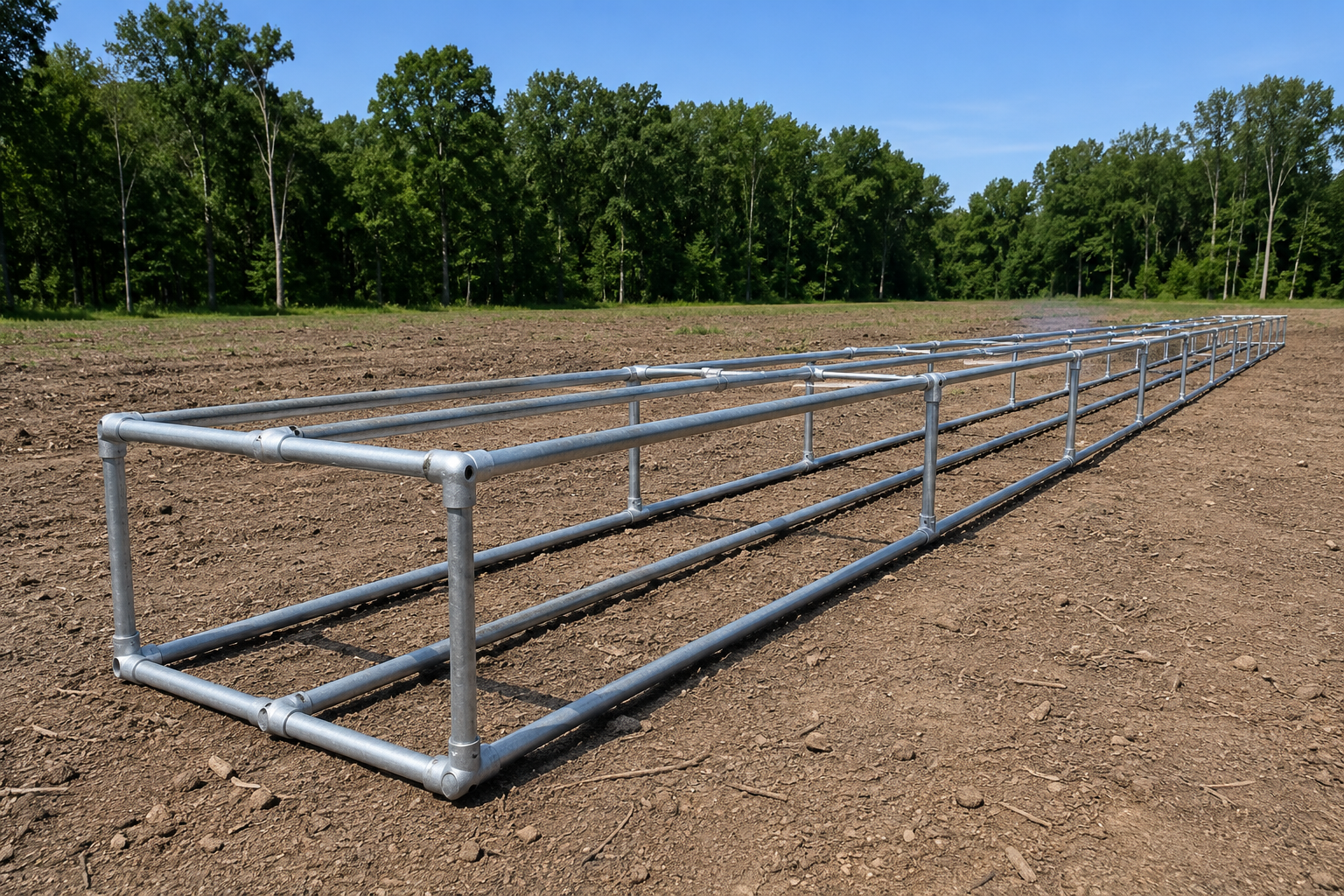
Inside that pile you build a grid of pipe, and you build that grid up off the ground so it sits suspended right in the center of the pile where all the heat is.
Now here's the thing about the pipe. A lot of folks will tell you to use polytubing for this. And polytubing is okay — if that's all you can afford, use it. But understand that plastic is an insulator. It's not a conductor. You don't want an insulator sitting in your heat source.
What you really want is thick-walled galvanized pipe. Maybe copper if you can swing it, but galvanized is cheap, it's strong, it's durable, and it conducts heat very well. It's also got the thermal mass to hold that heat longer — and that matters, because you're going to be getting in there and turning this pile with a pick and a shovel. The pipe needs to be tough enough to take that and stay put.
Getting the heat where you want it
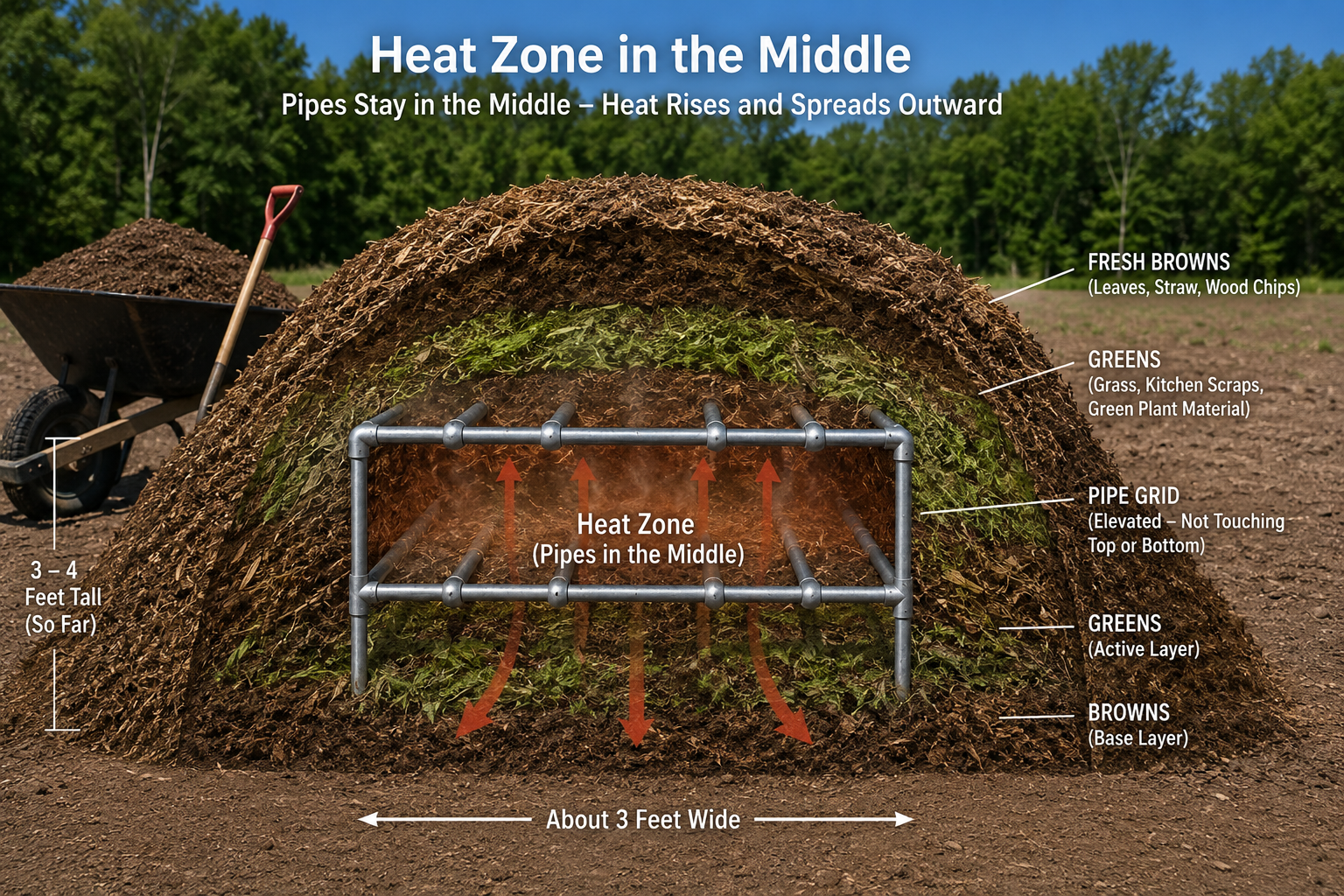
Water runs through that galvanized pipe grid, picks up the heat out of the compost, and carries it to two places.
First, it runs to polytubing buried a couple inches under the soil in your greenhouse floor. That keeps the ground warm, and the heat radiates up into the whole greenhouse. That's your radiant floor.
Second, it runs over to your cabin. Same idea — radiant floor tubing in the floors of your home. And that doesn't just warm the floor, it warms the whole house. It'll heat your hot water too, so you can take a hot shower.
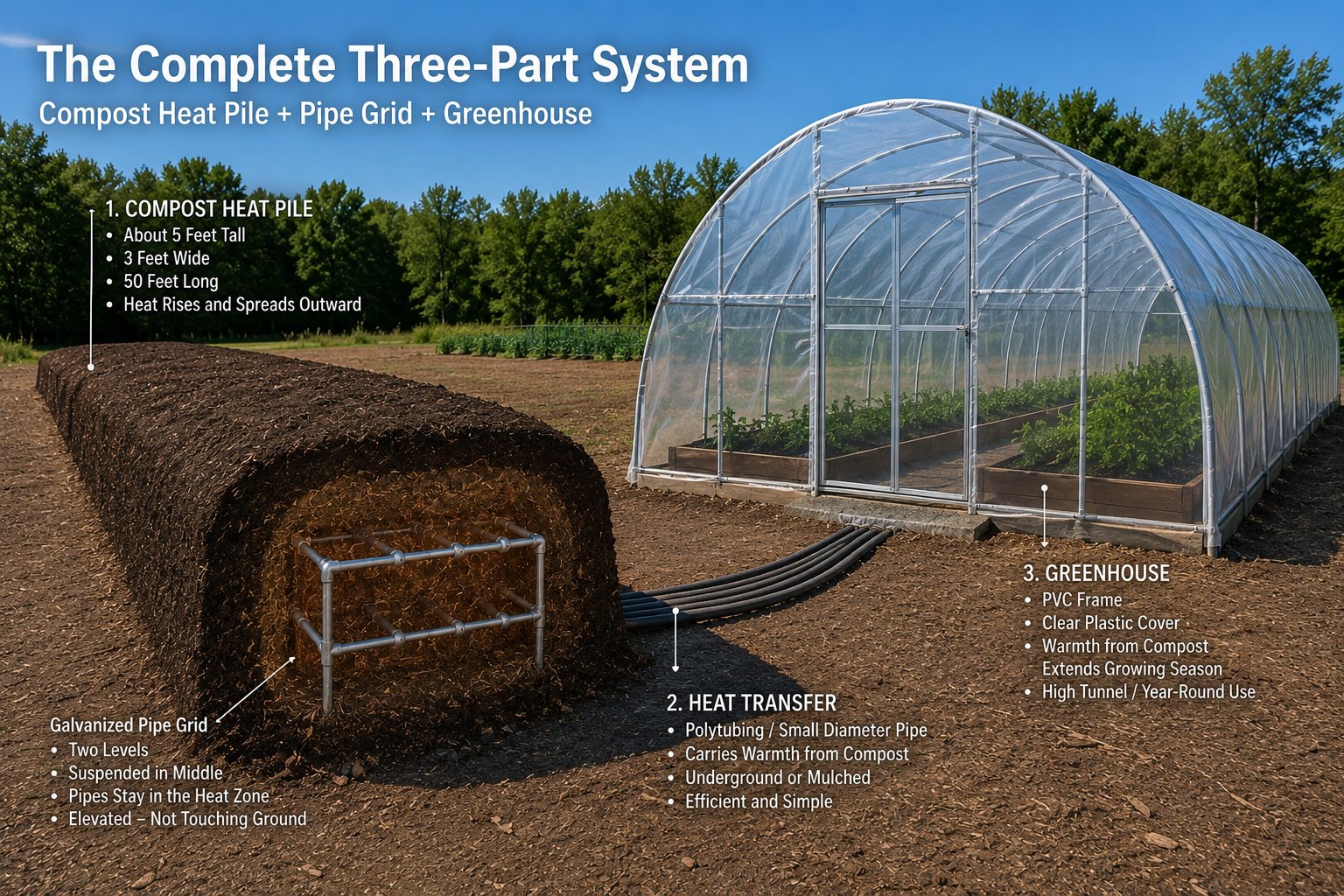
That's the 3-part system. Greenhouse, cabin, hot water — off one pile of compost.
Why this matters in winter
Here's the part that makes the whole thing worth it.
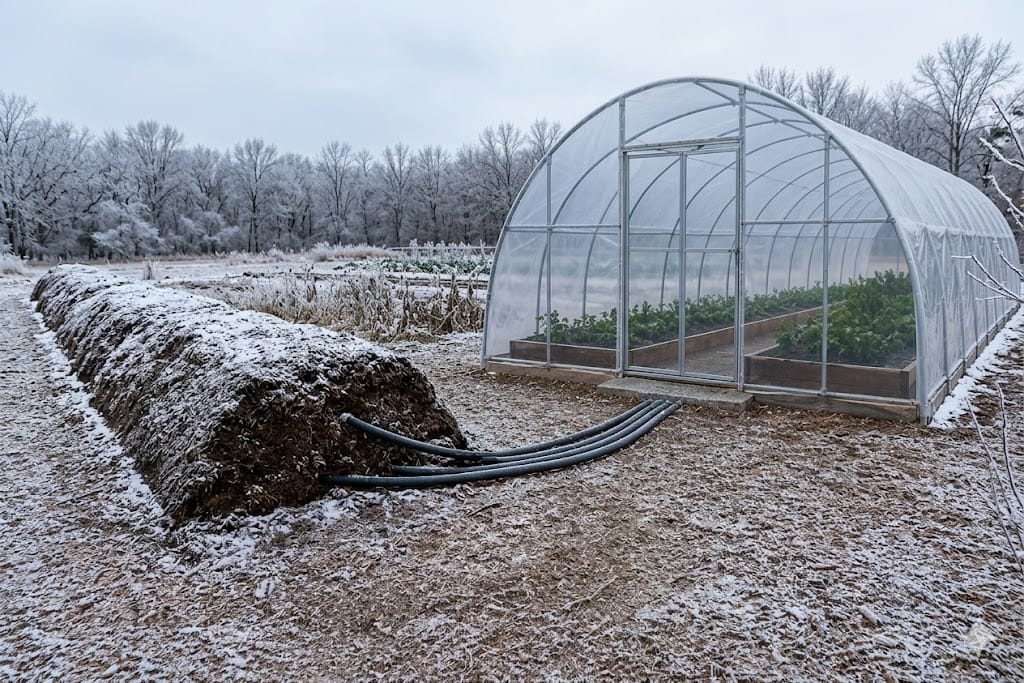
This heats your greenhouse through the winter. That means you grow food year-round. While everybody else's garden is dead and frozen, yours is still producing.
And in spring and summer you don't even need to run it for heat — the sun does that work for you. But the system already did its job, because it carried you through the cold months when nothing grows outside.
The power side — and read this part carefully
You need a pump to move that water through the system. And the pump runs on your power system.
Now this is where people get confused, so pay attention.
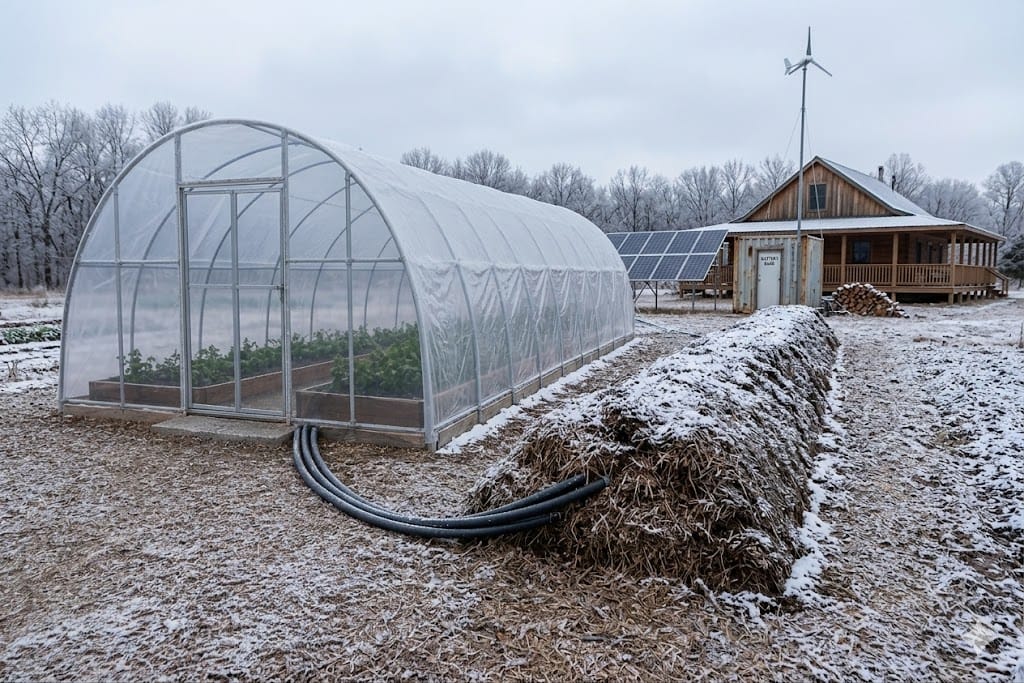
You are not running anything directly off your solar panels. You are not running anything directly off your wind turbine. The panels and the turbine do one job — they charge your batteries. That's it.
You run off the batteries. The batteries feed an inverter, the inverter converts the power from DC to AC, and everything in your system runs on regular AC current.
This is why you don't need a bunch of special DC appliances and DC pumps and DC everything that people think they have to buy to go off grid. You don't. Not in a cabin, not even in an RV. A normal AC pump works just fine, because the inverter already did the conversion for you.
For your batteries, use LiFePO4 — lithium iron phosphate. They're the expensive part of the whole setup, no way around that, but they're worth it. Don't waste your money on AGM batteries. AGM is barely a step up from old lead acid. It's trash.
Solar panels are cheap now. And a 1,000 to 2,000 watt wind turbine is solid supplemental power. Between the sun and the wind, your batteries stay charged, and your pump keeps running.
A few things that'll make or break it
Size the pile right. Too small and it can't hold its heat — it bleeds out faster than the microbes can make it. Build it the length of your greenhouse and you've got the mass you need. Build it high enough that it'll insulate the heat zone in the winter.
Watch your moisture. The pile needs to be moist to move heat well — and honestly, a wetter pile transfers heat better. But there's a balance. You don't want it soggy. Soggy cools everything down and turns it into a mess. Moist, not swamp. Wet it down when it needs it, which isn't that often.
You're going to turn it. Pick, shovel, rake. Same work you'd do on any compost pile. There's labor here, I'm not going to pretend there isn't. The difference is this pile is paying you while you do it.
Put a thermostat between the compost and the house. The heat coming off that pile is hot — too hot to send straight into your shower. A thermostat regulates it down to something safe and useful. Some of that heat cools on its own in transit anyway, depending on how far your greenhouse is from your cabin and how deep the pipe is buried. The thermostat handles the rest.
The backup
If you want a backup for emergencies — a bad ice storm, a long stretch with no sun and no wind — you can put a propane space heater in the greenhouse. One of those big patio heaters works fine.
But understand that's insurance. It's not your system. Your system is the compost pile, the galvanized pipe, and a battery bank charged by the sun and the wind.
This system works on proven methods, proven physics, and proven systems that already work in multiple places, we're simply combining technologies into one system that heats your cabin and your greenhouse and your water, and it makes it possible to grow food years round!
This is just one of many of my ideas I've shared or written about over the years.
Hopefully you can build a successful system.
I've just never had the money to build any of it. Maybe you can.
Eric
Dear Reader,
I would greatly appreciate your support to help me create more content like this. My mission is to help folks on their journey to go off grid through educational and informative, and sometimes entertaining articles and essays about off grid living and survival.
You can support the mission by subscribing to my off grid magazine here: Off Grid Living & Survival magazine Lifetime Membership Only $49 + ALL BACK ISSUES FREE
Thank you!
Sincerely,
Eric
DID YOU GET THE 3 NEW ISSUES? Go signup and download them all