
How Much Land Does It REALLY Take To Go Off Grid?
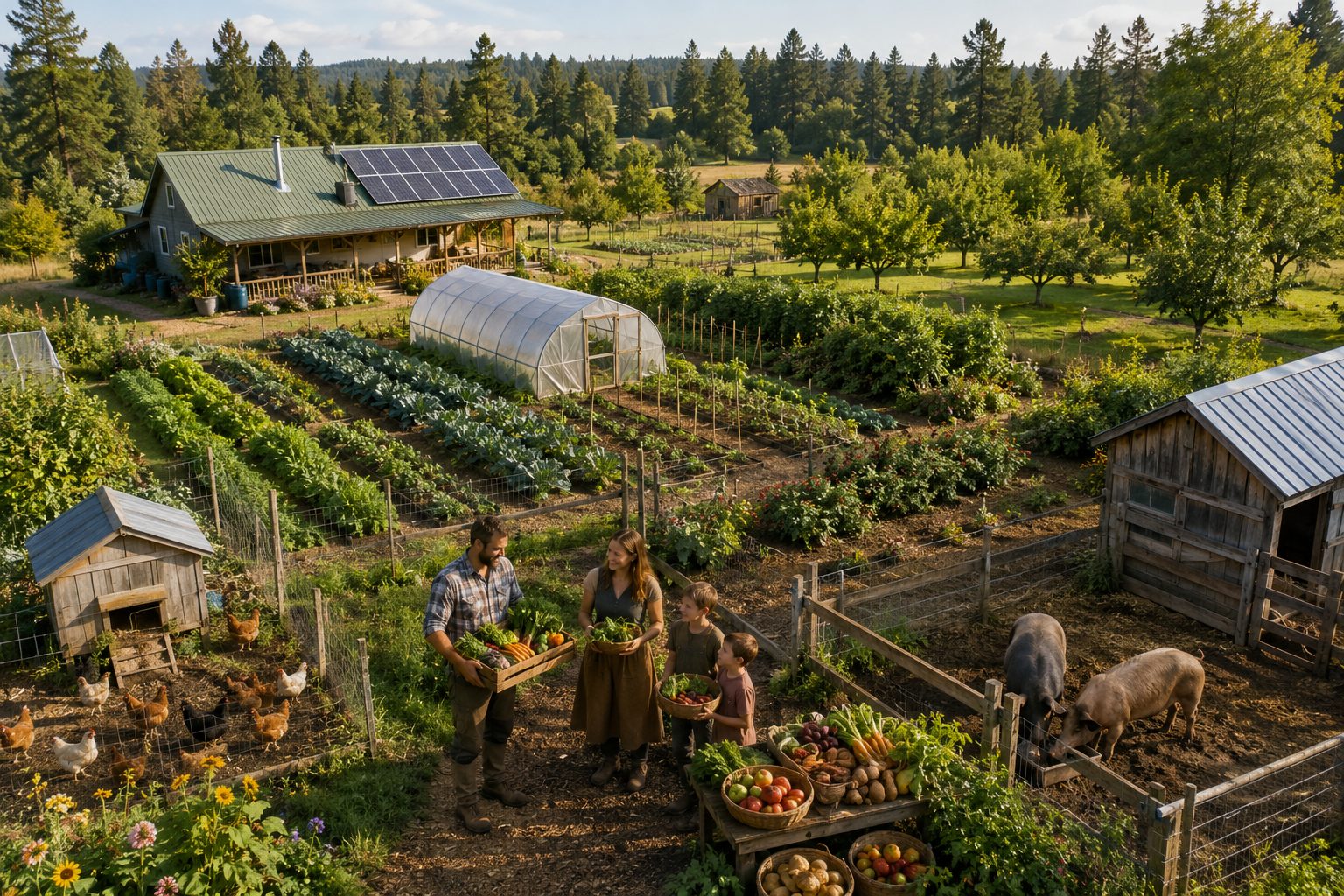
How much land does it take to go off grid?
This is the same question everytone asks when they first start. And while you can do it on 1 acre, it'll be cramped and there are local laws and ordinances, covenents and restrictions that will prevent a lot of what you will need and the things you want to do. So get a little bigger plot of land.
The short answer is this.
5 acres is all you really need. I know people who've done it on a lot les, and hile that's possible, it's not ideal. Again...it's absolutely possible, but not ideal to live on just one acre. You need room to grow, room for livestock, room for your outbuildings and most importantly room to breathe and relax after a long day of work on the homestead.
I lived on a property that was 1 acre and while it was fairly large compared to a typical suburban lot, it was still not big enough to do everything I wanted to do. It was way too small for my taste, and most people would probably agree. 3 acres is getting close and it's very doable if you split up your homestead into thirds. 1 acre for your home, workshop/barn, pig pens, chicken coop, greenhouse, garden shed, wellhouse, etc. with enough space between them that if there's a fire they don't all go up in flames. spread them out over the acre, and clear it of trees and shrubs for fire safety. 1 acre for livestock and 1 acre for growing food, a little grain, fruits and veggies. That's doable and most people would be absolutely thrilled with a 3 acre off grid homestead. I would be too.
But...to really be comfortable and allow room for growth, you're going to need about 5 acres. THis allows plenty of room to grow and spread out, and give yourself some breathing room. it's enough to run a small business from home. It gives you more privacy from your neighbors and it provides plenty of room for your animals too.
In my opinion 5 acres is decidedly the optimal size for an off grid homestead.
Read my article on How To Find The Perfect Off Grid Land
Next is water and power. Read my article on the Perfect Off Grid Power System
Then comes the food.
***
How much land do you really need to feed a family of four?
Not hypothetically, not in some idealized permaculture fantasy, but in the real world, with actual work, time, weather, and limitations. The average American eats close to 2,000 pounds of food a year, including a lot of meat, dairy, fruits, vegetables, grains, and sweeteners.
Multiply that by four people and you're looking at 8,000 pounds of food annually. So the question is: how much land does it take to grow that? The answer depends on what you grow, how you grow it, and how efficient you are with space and resources. This isn't about survival rations or subsistence farming, this is a practical breakdown of what it takes to build a self-sustaining off-grid homestead that actually works.
From row crops to vertical gardens, chickens to pigs, fruit trees to mushrooms, here's what it realistically takes to feed your family from your land.
Here's a realistic, well-balanced breakdown for a self-sustaining off grid homestead for a family of 4, including:
- Caloric needs (~2,000 lbs of food/year/person or ~8,000 lbs total)
- Realistic land yields (row crops vs vertical gardening)
- Integrated small-scale animal husbandry
- Variety of crops for nutrition and practicality
FIRST - The Data:
The average American consumes approximately 1,996 pounds of food per year. This includes a significant amount of meat, dairy, fruits, vegetables, grains, and sweeteners. Meat consumption alone averages around 224.6 pounds per year, according to sentientmedia.org.
Detailed Breakdown:
- Meat and Poultry: 185 pounds. This includes chicken, turkey, pork, and beef.
- Dairy: 630 pounds (milk, yogurt, cheese, ice cream).
- Fruit: 273 pounds.
- Vegetables: 415 pounds.
- Grains: 197 pounds.
- Sweeteners: 141 pounds.
- Fats and Oils: 85 pounds.
- Bread: 53 pounds.
- Apples: 19.6 pounds.
- Beef: 82 pounds.
- Poultry (Chicken): 127.2 pounds.
This estimated consumption is based on data from the U.S. Department of Agriculture.
Based on the data, how much land do you need to feed a family of 4?
ANSWER: 1-3 acres of growing space (including space for a good-sized greenhouse).
Add another 2 acres for house and play area, workshop, barn, garden shed and other outbuildings.
Based on this USDA data and average American consumption, a family of four eats about 8,000 pounds of food per year.
That includes roughly 900 pounds of meat and poultry, over 1,600 pounds of dairy, 1,000+ pounds of fruits and vegetables, and the rest made up of grains, oils, sweeteners, and other foods. So if you want to produce that at home, you need to start by figuring out what's realistic per acre, and how much of it you can actually grow and raise yourself.
Conventional row crops can yield anywhere from 5,000 to 30,000 pounds per acre depending on what you're growing. Lettuce gives you less, potatoes give you more. A well-managed, diverse vegetable garden realistically produces 10,000 to 15,000 pounds per acre, but that's assuming you know what you're doing and you're putting in the work. Add in small-scale vertical or high-density growing methods and you can push those yields even higher, but that comes with complexity, energy needs, and sometimes infrastructure you might not have off-grid.
Now factor in livestock. A single pig might weigh 250 to 300 pounds live, but after butchering, you're getting closer to 140 to 180 pounds of usable meat. Chickens yield about 4 to 5 pounds each, turkeys around 12 to 15 pounds dressed. Rabbits, ducks, goats, and fish can all add up, but you need pens, coops, pasture, and in some cases, water systems. Eggs are a bonus. 10 hens can give you over 2,000 eggs a year, which adds up to over 150 pounds of food by weight, and a whole lot more in nutrition.
Put it all together, and a realistic self-sustaining food system for a family of four, with a solid mix of meat, eggs, vegetables, fruit, and maybe some grain, will need between 1.5 and 2.5 acres. That includes around half an acre for high-yield vegetable crops, a quarter acre for berries and fruit trees, another quarter to half an acre if you're growing grain, and half to a full acre for animals. You can cut that down if you go heavy on vertical gardening or aquaponics, or if you're okay skipping meat and running a vegetarian operation. But if you're after full-spectrum food production, protein, calories, nutrients, and flavor, 2 acres gives you breathing room and sustainability without going overboard.
Here's a breakdown below of what you'll realistically need.
Keep in mind, this is all based on averages, and should be used only to give yourself a basic idea of what might work for your family.
🧮 LAND YIELD AVERAGES (Per Acre)
| Method | Yield Range (lbs/acre/year) | Notes |
|---|---|---|
| Conventional row crops | 5,000–30,000 | Varies widely by crop (lettuce vs potatoes vs corn) |
| Vegetables (diverse planting) | 10,000–15,000 | Diverse, well-managed garden |
| Vertical (1 story) | 40,000–70,000 | 20 lbs/sqft = 872,000 lbs/acre — unrealistic w/o tech |
| Realistic vertical garden yield | 30,000–40,000 lbs/acre | Assuming well-managed HDHY vertical system |
| Aquaponics/hydroponics | 5x–10x traditional per sqft | Efficient but water and energy intensive |
🔧 Realistic family farm avg: ~10,000–15,000 lbs/year/acre w/ mixed methods and animals.
🧑🌾 LAND REQUIREMENTS
| Component | Area Needed | Yield (lbs) | Notes |
|---|---|---|---|
| Vegetables/Fruits | 0.5–0.75 acres | 4,000–6,000 | Lettuce, kale, beans, squash, tomatoes, carrots, etc. |
| Orchard/Berries | 0.25 acres | 1,000–2,000 | Apples, pears, berries (strawberries, raspberries) |
| Grain (optional) | 0.25–0.5 acres | 500–1,500 | Corn, wheat for flour, feed |
| Vertical/HDHY add-on | 0.1 acre | 4,000+ | Small structure or dense system |
| Livestock (see below) | 0.5–1 acre | 1,000–2,000 | Mixed meat and eggs |
🧮 Total land needed: ~1.5–2.5 acres for full independence w/ meat, produce, fruits, & eggs. Add more for grain or excess yield.
🥕 CROP MIX (Per 0.5–1 Acre Garden)
High-yield, diverse, and easy-to-grow mix for family of 4
| Category | Examples | Notes |
|---|---|---|
| Leafy Greens | Lettuce, kale, spinach | Fast growing, multiple harvests |
| Root Veggies | Potatoes, carrots, beets, onions | Dense calories, winter storage |
| Legumes | Green beans, peas | Nitrogen-fixers, protein |
| Nightshades | Tomatoes, peppers, eggplant | High value |
| Squash family | Zucchini, pumpkins, cucumbers | Large yield |
| Berries | Strawberries, raspberries | Perennials, great return |
| Fruit Trees | Apples, pears, plums | Need 2–5 years to bear |
🐓 ANIMAL HUSBANDRY (Small-Scale Sustainable)
| Animal | Quantity | Yield (Meat/Eggs) | Space Needed | Notes |
|---|---|---|---|---|
| Chickens | ~10 | 1,500–2,000 eggs/year + 100–150 lbs meat | Coop + run (~0.05 acre) | Dual-purpose |
| Ducks | 4–6 | 600–800 eggs + 60–90 lbs meat | Coop + pond (~0.05 acre) | Hardy layers |
| Rabbits | 4 does + 1 buck | ~200–300 lbs/year | Small hutch | Quiet, space-saving |
| Goats | 2–4 | ~400–800 lbs meat or dairy | 0.25–0.5 acre | Browse eaters |
| Pigs | 1–2 | 150–300 lbs meat/year | 0.25 acre | Efficient food converters |
| Turkeys | 2–4 | ~75–150 lbs meat/year | Free-range or pens | |
| Quail | 10–20 | ~1,500 eggs/year | Cage or aviary | Compact, fast reproduction |
| Geese | 2–4 | ~100 lbs meat, good guards | Pond + pasture | Self-sufficient grazers |
| Fish (optional) | Tilapia or trout | ~100–300 lbs/year | Aquaponics system | Dual crop with plants |
Raw animal live weight ≠ meat yield, and the real numbers depend on:
- Dressing percentage (typically 55–75%)
- How you butcher (bone-in vs boneless, organs saved or discarded)
- Which parts you're willing to eat (some cultures waste nothing; others only want prime cuts)
🧂 MISC / BONUS
- Herbs: Basil, oregano, thyme, cilantro — small vertical/herb spiral
- Mushrooms: Can grow indoors or in shady spots — high-protein
- Bees: Pollination + honey
- Composting: Essential for nutrient cycling
- Water catchment: Rain barrels + graywater reuse
📦 SUMMARY: FOOD FOR 4, PER YEAR
| Source | Yield Estimate (lbs/year) |
|---|---|
| Vegetables | 3,000–5,000 |
| Fruits/Berries | 1,000–2,000 |
| Meat | 1,500–2,500 |
| Eggs | 1,000+ (equiv. 100–150 lbs) |
| Grain/Other | 500–1,000 |
| Total | 7,000–10,000 |
NOW THE PART NOBODY WANTS TO HEAR: START TODAY
It would be wise to start growing your own food now. Just in case the food supply chain is broken. Don't depend on the food supply.
I'm not saying stockpile large quantities of food, (though you should have enough to last 3 months at least). Just saying get some seeds (not much, leave some for others), use your produce at home to grow more as well. Use your garage, shed, build a hoop house greenhouse outside. Learn how to can and preserve your food if you don't know how already. You can grow year round INDOORS if you use LED grow lights and solar and batteries to power your lighting.
Food is going to be your number one priority after water and shelter. Shelter in place. Stay put and prepare for the long haul.
Make food water and shelter part of your long term security plan. Because without it you're dead. Not trying to be melodramatic, just trying to get you to realize this pandemic is going to last longer than you think it will. If it doesn't, then at least you have extra food.
Grow veggies, berries, and fruits, and raise chickens and pigs.
PIGS:
Pigs grow to 250 lbs in 6 months (you can harvest earlier if you need to). Get 1 pig per person. That's about 200 pounds of MEAT in your freezer per pig!
CHICKENS:
Have at least 2 chickens per person in your family that you want to feed, then DOUBLE that number if you plan on eating the chickens.
The chickens are for egg production, each chicken will produce about 1 egg per day. But if you want to eat chickens you'll need at least 1 chicken per week you plan on being self sufficient. Yes you can breed the chickens, a few roosters running around will keep you in fertilized eggs and you can hatch the chicks in a makeshift incubator. (We should all know how to do this for our own food supply.)
FEED:
Get about 100 pounds of corn for feed (it's relatively inexpensive if you buy from a feed store in bulk), you can ration it to feed the chickens for a good long while. Let the chickens roam your yard to supplement their diet with bugs and worms so it doesn't cost you as much to feed them.
Build a chicken tractor if you're worried they'll run or fly away. Look up "chicken tractor" if you don't know what it is. Also lookup "hoop house greenhouse". They are VERY EASY and cheap to build.
GARDEN:
You can grow veggies from the veggies you already have in your fridge and sitting on your counter. Go get some potatoes for planting. Grow lettuce, tomatoes, peppers, squash, corn, and green beans. Look up THE 3 SISTERS (corn, green beans and squash) and plant in this way.
POWER:
Get some LED grow lights, solar panels, and deep cycle batteries for storing energy. A small 500W to 1000W wind turbine will charge your batteries 24/7.
BACKUP FOOD:
Buy a 50 pound bag of rice and beans and put that to the side in a cool dry place as a backup food supply.
PRESERVING:
Get a pressure cooker, mason jars, lids and rings, and some large cooking pots to cook down large quantities of food and can and preserve the food you grow.
This is just what I could think of off the top of my head. I'd be doing all this right now if I had the cash to do it. Long term you need food and water and shelter. That's it. Communications and electricity are also very important.
I'll try to add more as I think of things that can help you and your family survive. If you have any questions feel free to ask. Hope this helps!
✅ Final Thoughts
You only need about 5 acres to sustainably feed a family of 4, including meat and eggs, using:
- Mixed row crops
- Vertical/hydro methods for density
- Diverse livestock
- Small-scale orchard & berry patch
If desired, this can scale out modularly. Add 1 acre per 2 to 4 more people with similar density strategies.
Can you do it on less? Sure...I know folks who do it on 1-2 acres and very smart land use. I've seen people grow 6k pounds of food on 1/10 an acre before. Scale that up and that's 60k pounds of food per acre. Now...realistically, no one is going to need that much food and you'd need a whole crew of people working that farm all day every day to produce that much food. But...for what you'll be doing for your family, a small 5 acre off grid homestead farm is all you need to live very comfortably with plenty of food, and maybe some extra for neighbors and the farmers market. Heck, you could start your own artisanal food business and run it from home, selling jams, jellies, baked goods, meats and other foods online with satellite internet.
I've seen people make over $100k a year from their 1-2 acre farm by selling food at the farmers market and to local restaurants. They were highly specialized and the quality was very high, but the point is it's possible.
The main takeaway here is that you can feed your family of 4 on 3-5 acres of land. That's all you really need.


